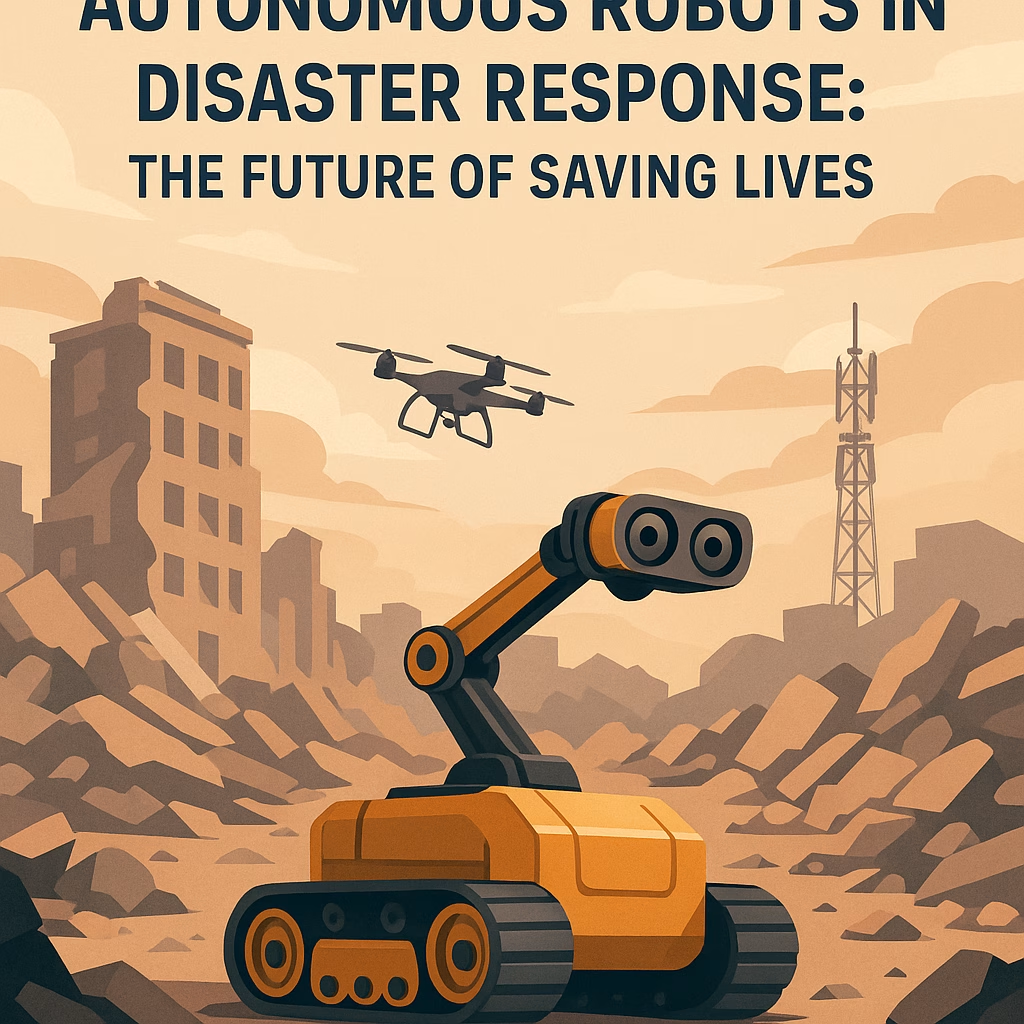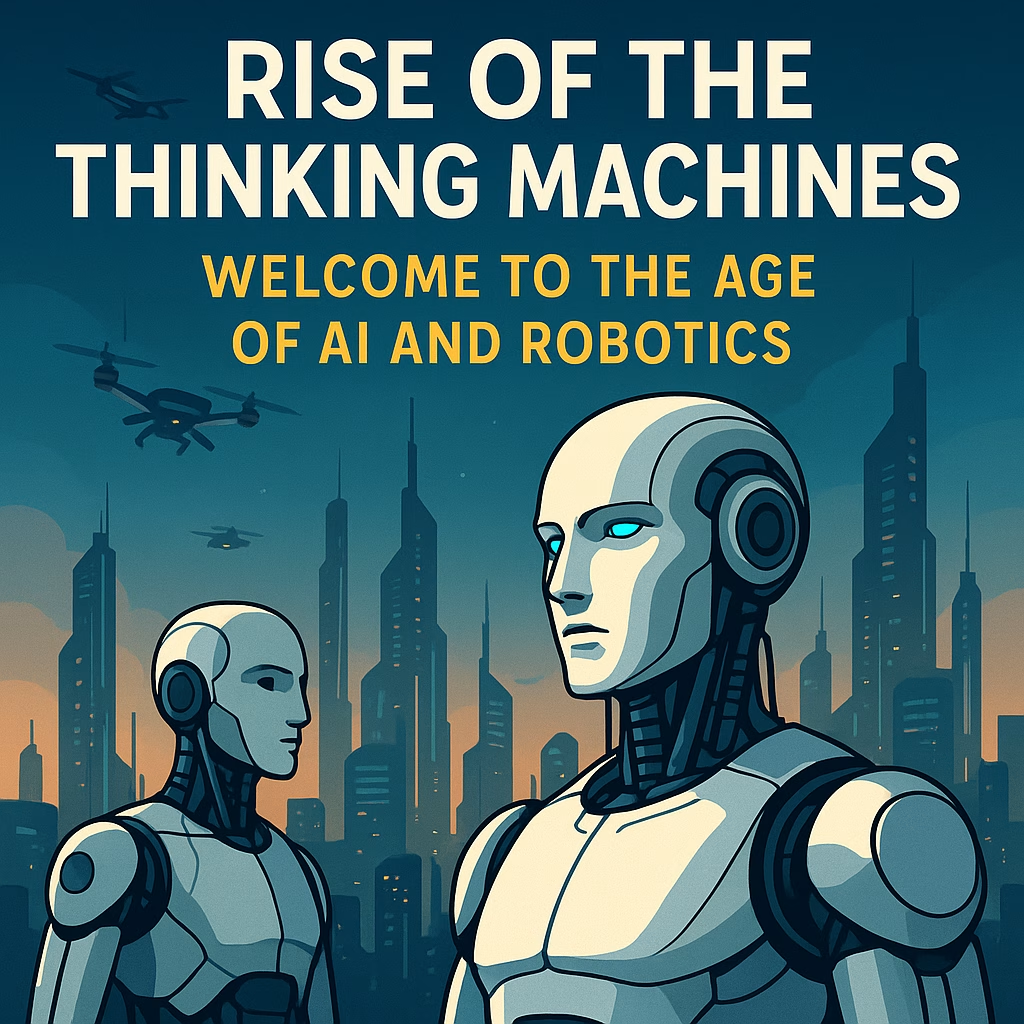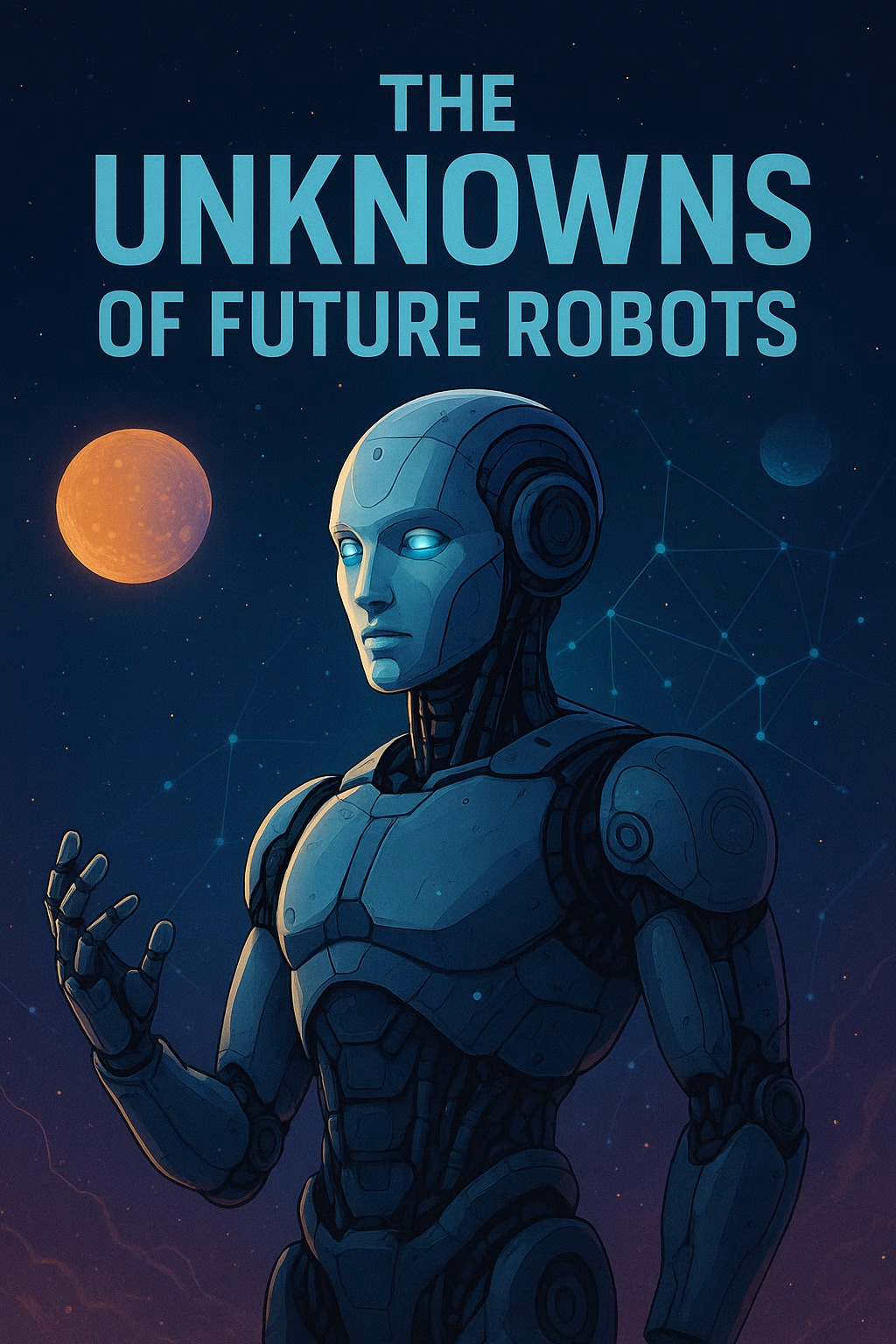
Robots are no longer confined to science fiction—they are becoming part of our everyday reality. From autonomous vehicles and smart assistants to surgical robots and industrial automation, we already see glimpses of what is possible.
But beyond what we know today lies a world of uncertainty. The future of robotics carries fascinating unknowns that could redefine humanity’s relationship with technology in ways we can only imagine.
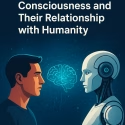
1. Will Robots Develop Consciousness?
The biggest question is whether robots will remain advanced machines or eventually achieve self-awareness.
- Could they think independently and form their own goals?
- Would they merely simulate emotions, or actually feel them?
If robots ever cross this line, it will change philosophy, ethics, and even the definition of life itself.
2. Blending Biology and Machines
Future robots may not be built from steel and circuits alone. Advances in bioengineering could lead to hybrid robots that combine living tissue with mechanical parts.
- Self-healing materials
- Robots that grow and adapt like organisms
- Bio-robots capable of medical repair inside the human body
This raises new questions about whether such entities are machines, living beings, or something in between.
3. Unknown Social Roles
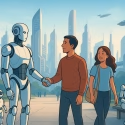
Robots are likely to expand into homes, offices, and public spaces—but their exact role remains unclear.
- Will they replace human workers, or collaborate as supportive partners?
- Could they become caretakers, teachers, or even companions?
The way society adapts will determine whether robots are embraced or resisted.
4. Ethics and Legal Boundaries
If a robot makes a mistake—or even causes harm—who is responsible?
- The manufacturer?
- The programmer?
- The owner—or the robot itself?
Future debates may even include granting citizenship rights to robots, just as Saudi Arabia did symbolically with the humanoid robot “Sophia” in 2017.
5. The Future of War and Security
Military robots and autonomous weapons pose one of the darkest unknowns.
- What happens if machines can decide when to use lethal force?
- Could robots be hacked and turned into threats?
The future balance of peace and conflict may heavily depend on how humanity regulates robotic warfare.
6. Human–Robot Relationships
Will people form emotional connections with robots beyond utility?
- Friendships, mentorships, or even romantic relationships with AI-driven robots may emerge.
- How would this impact human psychology, family dynamics, and culture?
This remains one of the most unpredictable—and controversial—possibilities.
7. Self-Evolving Robots
Currently, robots improve through updates designed by humans. But in the future, they may be able to redesign their own software and hardware.
- Could robots evolve faster than humans can control them?
- Would they surpass human intelligence and autonomy?
This unknown carries both incredible promise and existential risk.
8. Invisible Robotics
Not all future robots will be visible to the human eye. Nanorobots may operate inside our bodies, repairing cells, fighting diseases, or even enhancing human capabilities.
- Who will control them?
- Could they be used for surveillance or manipulation without consent?
This raises profound questions about privacy, safety, and trust.
🌍 Conclusion: A Future Full of Mystery
The most intriguing thing about future robots is not what we already know—but what remains uncertain. Will they remain loyal helpers, or evolve into independent beings with their own place in society?
The truth is, the future of robotics is still being written, and humanity’s choices today will determine whether it becomes a story of cooperation, conflict, or something in between.
✨ What do YOU think?
Share your thoughts in the comments and join the conversation. Don’t forget to log in to our website to explore more deep insights on future technology.