A Complete Guide
Understanding robots is not only about knowing how they move or perform tasks — it is about discovering the way they sense, think, and interact with the world. Whether you are a beginner, a researcher, or simply curious, here is a structured guide to help you understand robots.
1. Technical Understanding: How Robots Work
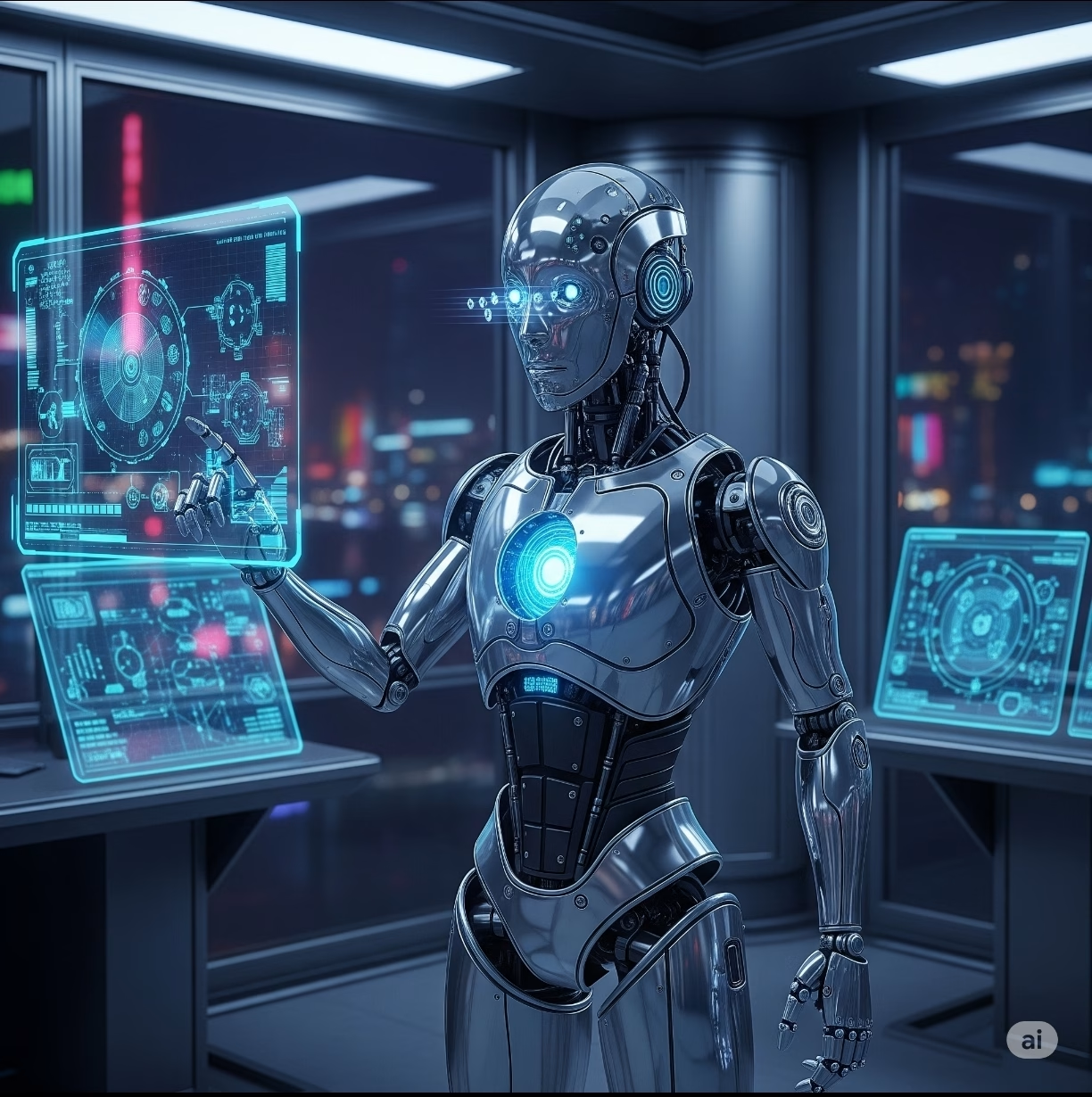
To understand a robot, you need to break it down into its core components:
- Hardware: motors, wheels, arms, sensors, cameras, batteries.
- Perception: devices like LiDAR, ultrasonic sensors, microphones, and cameras help robots sense their surroundings.
- Decision-Making: algorithms, artificial intelligence, and machine learning that allow robots to choose actions.
- Action: movement, speech, display screens, or object manipulation.
👉 In short: A robot perceives the environment → processes information → acts.
2. Human-Robot Interaction (HRI)
Robots are not just machines; they are designed to interact with people. To understand them, humans must pay attention to:
- Visual signals (LED lights, screen icons, gestures).
- Auditory cues (beeps, voice assistants, warning sounds).
- Natural language (chatbots, speech recognition, command-based communication).
- Body language (movement patterns, facial expressions in humanoid robots).
Example: A cleaning robot that flashes red light means “Error — I need attention”.
3. Emotional and Social Understanding
Some modern robots are built to mimic emotions. They smile, tilt their heads, or change tone of voice to signal happiness or sadness.
- This does not mean robots “feel” emotions — but they simulate them to improve communication with humans.
- To understand such robots, we must recognize the designed emotional cues they give us.
4. Philosophical Perspective
Robots reflect human goals, fears, and creativity.
- When we say “we understand a robot,” often we are actually understanding the human purpose behind it.
- Key question: Do we truly understand the robot itself, or the human logic embedded in it?
5. How You Can Start Learning to Understand Robots
- Experiment with robotics kits (Arduino, Raspberry Pi).
- Observe robot behavior: ask “what input caused this output?”
- Study AI and programming: understand how decisions are made.
- Engage with robots: test human-robot interaction in daily life (smart assistants, cleaning robots, chatbots).
🌟 Final Thought
Understanding robots is not about seeing them as “mysterious machines” — it is about decoding their logic, their design, and their interaction style. Once you see how they sense, process, and respond, robots become less of a mystery and more of a partner in human progress.