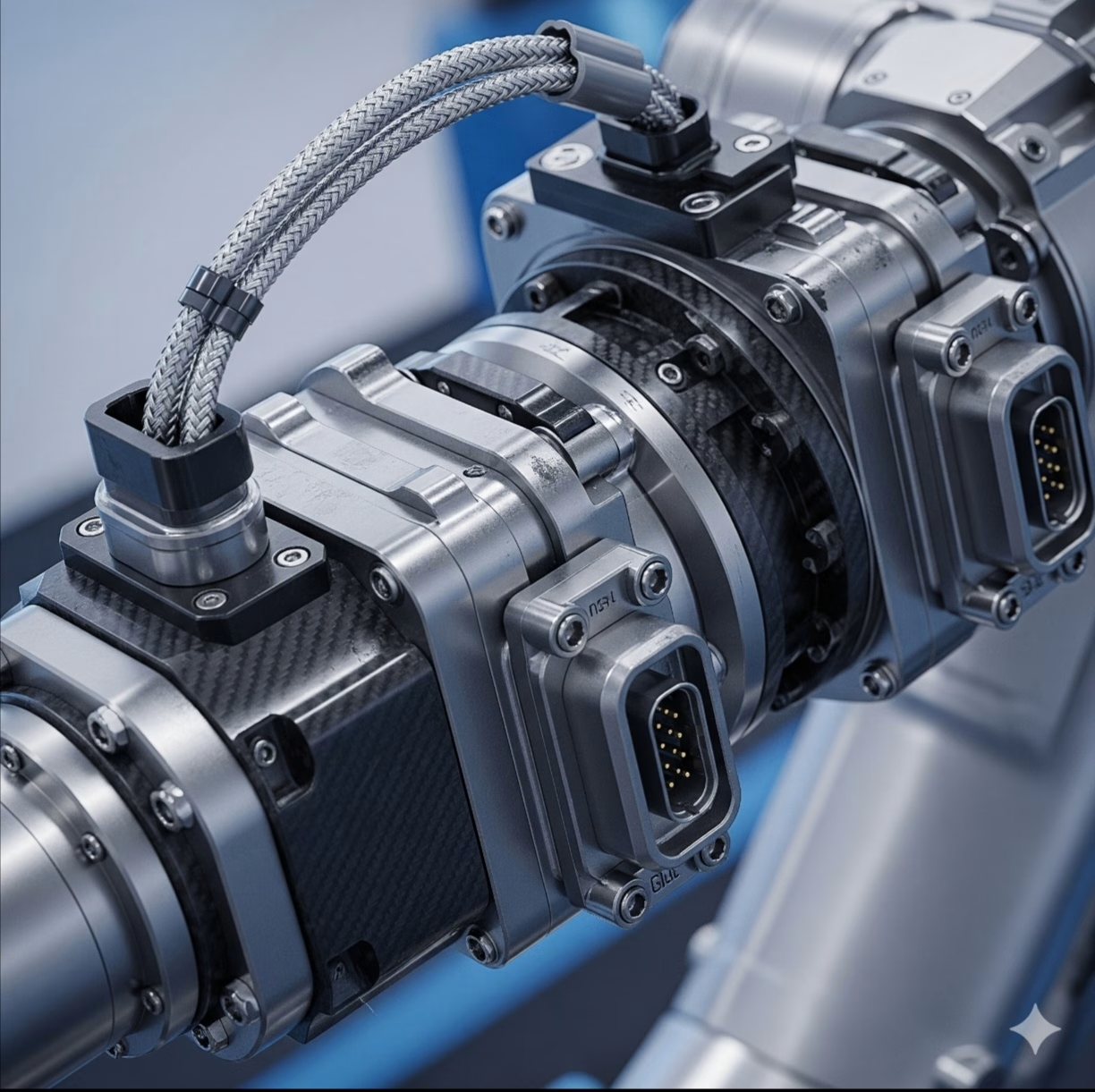
Robots operate in environments where precision, reliability, and strength are crucial. From industrial assembly lines to space exploration, the durability of a robot largely depends on the quality of its components. Below is a detailed overview of the most durable technological parts used in modern robotics.
🔧 1. Mechanical Components
Strong structural elements ensure stability and resistance to external stress.
- Titanium & Carbon Fiber Frames → Lightweight yet stronger than steel, offering resistance to corrosion and high-impact stress.
- High-Strength Alloys (Inconel, Stainless Steel) → Withstand extreme heat, pressure, and mechanical wear.
- Sealed Bearings → Designed to handle dust, moisture, and heavy loads for smooth joint motion.
- Harmonic Drives → Provide precise, backlash-free motion control with exceptional durability.
- Ceramic-Coated Joints → Reduce friction and extend the lifespan of moving parts.
⚡ 2. Power & Electronic Systems
Reliable electronics guarantee uninterrupted performance.
- High-Power Transistors (MOSFETs, IGBTs) → Essential for motor control under heavy loads.
- Industrial-Grade Printed Circuit Boards (PCBs) → Resistant to temperature fluctuations and vibrations.
- LiFePO4 Batteries → Safer and more durable compared to traditional lithium-ion batteries.
- Supercapacitors → Provide rapid bursts of energy while maintaining long cycle life.
🤖 3. Motors and Actuators
The muscle of robots – designed for both precision and endurance.
- Brushless DC Motors (BLDC) → Long lifespan, high efficiency, and minimal wear.
- Stepper Motors → Excellent accuracy and high reliability in repetitive motion.
- Linear Actuators → Deliver durable and powerful linear motion for robotic arms.
- Industrial-Grade Servo Motors → Combine speed, precision, and long-term endurance.
🛡️ 4. Sensors and Control Units
Durable sensors enable robots to perceive and interact with their environment.
- LIDAR & Radar Sensors (Military/Industrial Grade) → Reliable in harsh weather conditions.
- IP67/IP68 Rated Sensors → Water, dust, and impact resistant.
- Industrial IMUs (Inertial Measurement Units) → Provide stable motion tracking even in high-vibration environments.
- Fiber-Optic Sensors → Resistant to high temperatures and electromagnetic interference.
🚀 5. Specialized High-Durability Parts
Certain fields demand extra-strong materials and technology.
- Radiation-Hardened Electronics → Critical for space robotics to resist cosmic radiation.
- Titanium Pressure Capsules → Used in underwater robots to withstand deep-sea pressure.
- Kevlar & Composite Armor Panels → Provide protection for military robots.
- Medical-Grade Stainless Steel & Biocompatible Materials → Ensure safety and hygiene in surgical robots.
🌍 Conclusion
The advancement of robotics is not only about artificial intelligence and programming but also about engineering components that can endure extreme conditions. By integrating strong alloys, advanced electronics, durable motors, and resilient sensors, modern robots achieve unmatched reliability in industries, healthcare, defense, and exploration.
✨ What do you think? Should I also design this in a stylish infographic table (materials → usage → durability rating) so it looks even more professional for a website?