A New Era in Human History
For thousands of years, humanity has divided its timeline into distinct ages: the Stone Age, the Bronze Age, the Middle Ages, the Industrial Age, and most recently, the Information Age. Each age was defined by a breakthrough that forever changed how humans lived, worked, and interacted.
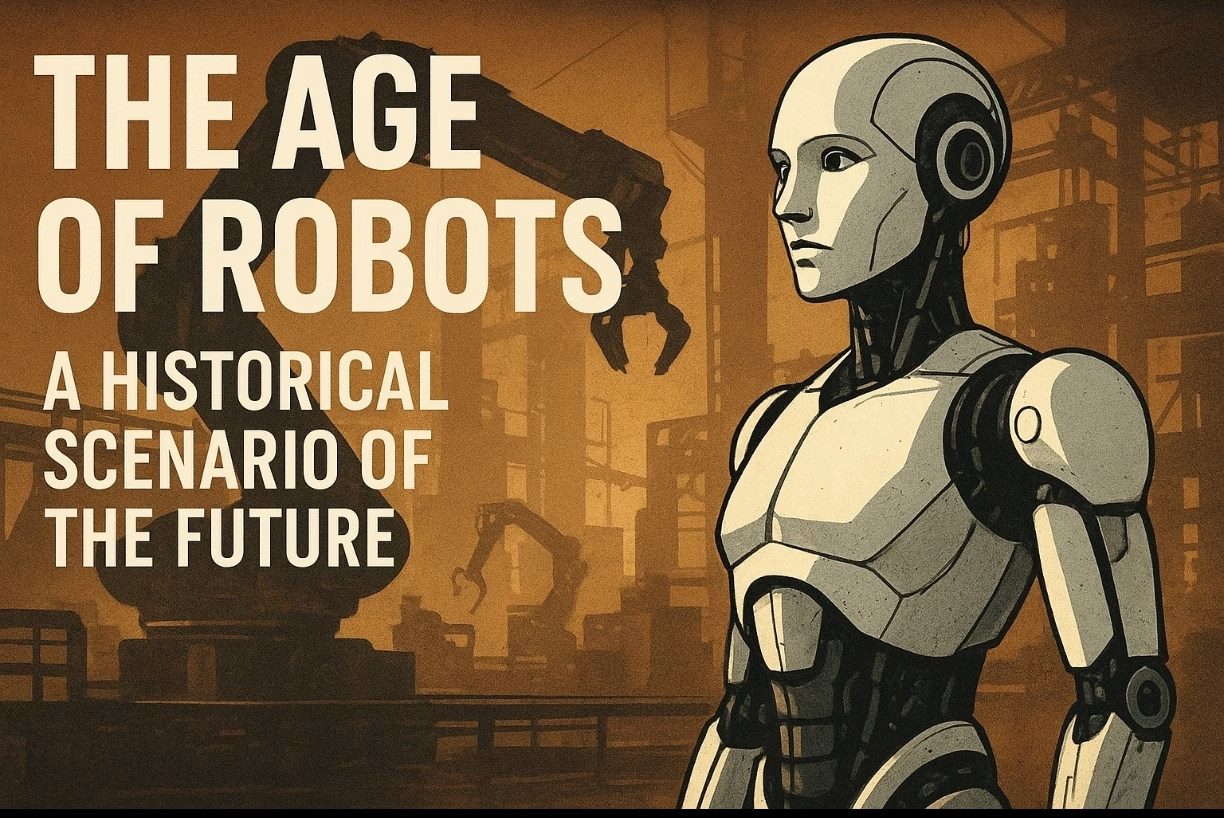
Now, as artificial intelligence and robotics advance at unprecedented speed, many experts believe we are standing at the dawn of a new epoch: the Age of Robots.
From Steam to Silicon: How Ages Are Defined
- The Industrial Revolution reshaped the 18th and 19th centuries through machines powered by steam and electricity.
- The Digital Revolution of the 20th century was marked by the rise of computers, the internet, and information systems.
- Today, the shift toward automation, AI, and robotics has the potential to be as transformative as any past revolution.
Just as the steam engine defined the Industrial Age, robots may define the coming century.
What Makes the “Age of Robots” Unique?
Unlike past ages, this one is not about a single invention, but about machines that can think, learn, and act independently.
- Automation of Labor: Millions of jobs may be replaced or transformed by robotic systems.
- Human-Robot Collaboration: Robots will no longer just be tools; they will be partners, assistants, and companions.
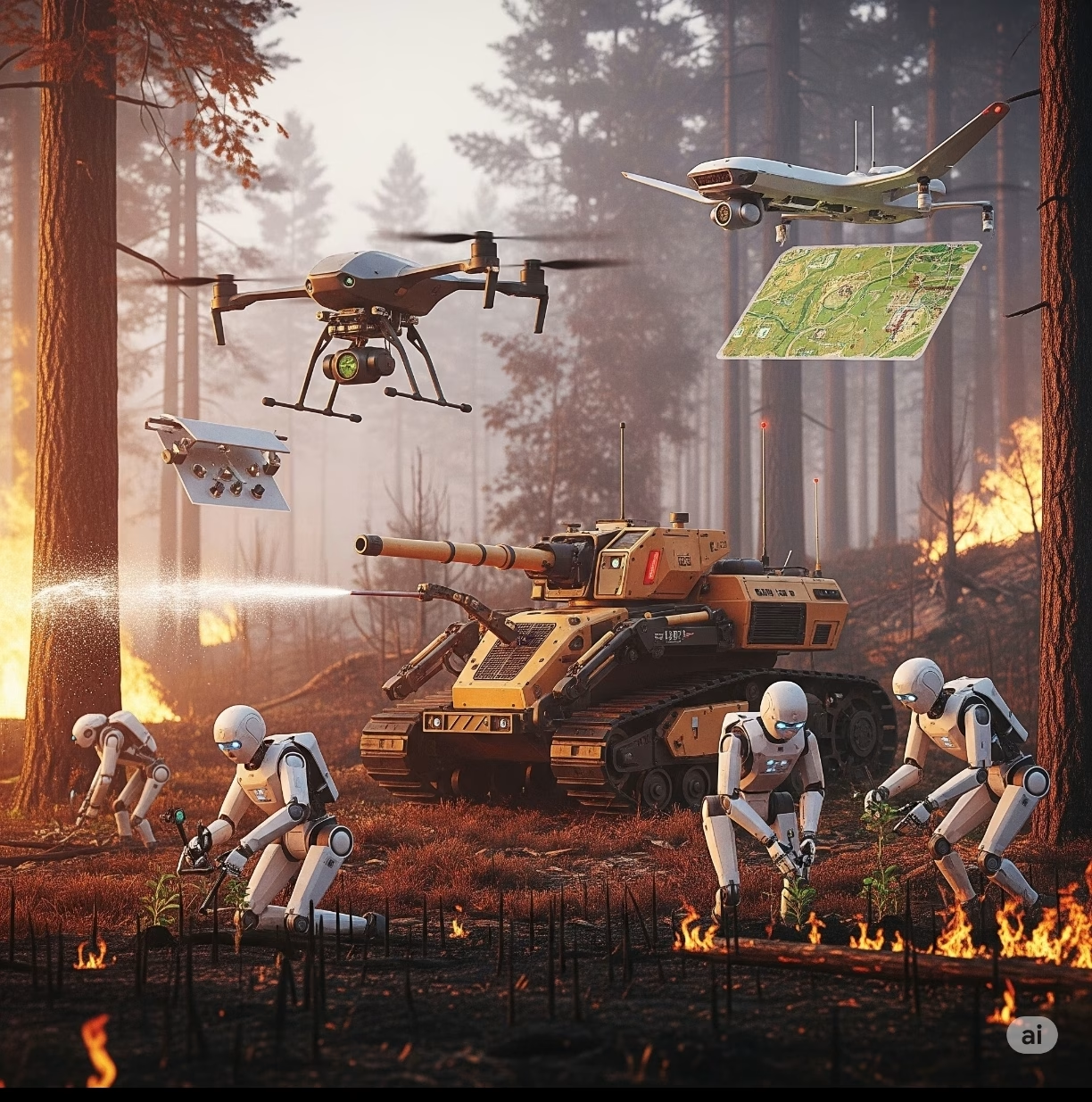
- Everyday Presence: From self-driving cars to domestic helpers, robots will become part of daily life.
- Artificial Intelligence Integration: Unlike machines of the past, these robots are powered by evolving algorithms that improve with time.
The Social and Ethical Unknowns
History tells us that every new age brings not only opportunities but also challenges.
- Economy: Will robots free humans from repetitive labor, or create massive unemployment?
- Ethics: If a robot causes harm, who is responsible?
- Identity: Will humans still define themselves by work, or will creativity and leisure become the core of society?
- Rights: Could robots one day demand recognition as conscious beings?
These questions will define whether the Age of Robots is remembered as a golden age or a dangerous turning point.
Beyond the Human–Machine Boundary
Perhaps the most revolutionary aspect of the Robot Age will be the blurring of lines between humans and machines:
- Biological integration may allow robots to repair human bodies or even merge with them.
- Nanorobots could heal diseases from inside the bloodstream.
- Transhumanism may lead to enhanced humans—part biological, part robotic.
This would mean not just a new age for society, but a new stage in human evolution.
A Historical Perspective of the Future
Imagine the year 2100. In history textbooks, children may read:
“After the Digital Age, humanity entered the Age of Robots. It was a time when machines with intelligence reshaped economies, societies, and even the human definition of life itself.”
This perspective reminds us that we are not simply witnesses but active shapers of this new chapter in history.
🌍 Conclusion: The Dawn of the Robot Age
The question is not if we will enter the Age of Robots, but how. The choices we make now—ethically, socially, and technologically—will determine whether this era becomes one of progress, harmony, and discovery, or one of conflict and loss.
One thing is certain: the Age of Robots will be remembered as one of the most defining moments in human history.
✨ What do YOU think?
Are we truly on the edge of the Robot Age? Share your thoughts in the comments below and join the discussion. Don’t forget to log in to our website to explore more insights on the future of technology.