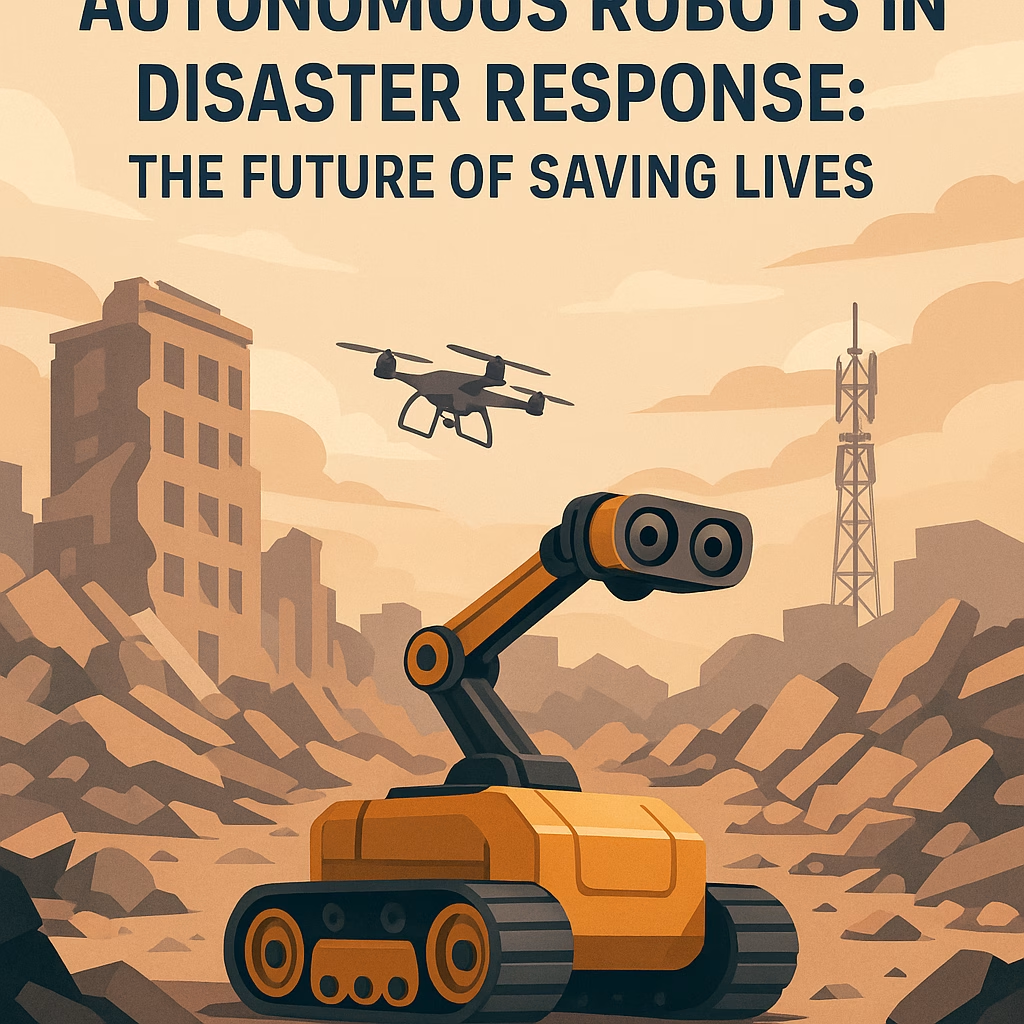
The Future of Saving Lives
🧭 Introduction
Natural disasters such as earthquakes, hurricanes, wildfires, and floods are becoming more frequent and severe due to climate change and urbanization. In these high-risk environments, autonomous robots are emerging as essential tools for search and rescue, damage assessment, and delivering supplies. With advanced sensors, AI, and mobility systems, these robots can navigate dangerous zones that are inaccessible or life-threatening for humans.
This article explores how autonomous robots are revolutionizing disaster response efforts, the types of robots used, their technologies, and real-world case studies showing their life-saving impact.
🤖 What Are Autonomous Disaster Response Robots?
Autonomous robots are machines capable of operating without direct human control. In disaster scenarios, they are designed to:
- Map collapsed buildings or affected zones
- Detect human presence under rubble
- Deliver medical supplies or food
- Provide real-time data to emergency responders
They come in various forms:
- Ground robots: Navigate rough terrain or rubble
- Aerial drones: Survey large areas from above
- Underwater robots: Inspect submerged structures or flood areas
These robots are often equipped with:
- Lidar and SLAM for autonomous navigation
- Thermal cameras to detect body heat
- Gas and chemical sensors
- Robotic arms for manipulation and lifting
🧠 Key Technologies Behind Them
Autonomous robots rely on a combination of the following:
- Artificial Intelligence (AI): For decision-making, path planning, object recognition, and prioritizing tasks.
- Sensor Fusion: Integrating multiple sensors (GPS, cameras, lidar, IMU) to perceive the environment accurately.
- Machine Learning: To learn from past missions or adapt to dynamic environments.
- Real-Time Mapping (SLAM): Simultaneous Localization and Mapping helps the robot build a map and localize itself in real time, even in GPS-denied environments.
🛠️ Real-World Applications
📍 1. Earthquake in Mexico (2017)
In the aftermath of a major earthquake, drones and ground robots helped assess building damage and locate trapped individuals. One drone with a thermal camera found survivors under a collapsed school.
📍 2. Fukushima Nuclear Disaster (Japan)
Due to radiation levels, human access was highly restricted. Robots were sent in to inspect and remove debris, assess damage to reactors, and map contaminated zones.
📍 3. Australian Wildfires (2020)
Autonomous drones were deployed to monitor the spread of fire, identify hotspots, and guide firefighters safely.
📍 4. Türkiye Earthquake (2023)
Rescue robots with snake-like designs were used to navigate through narrow gaps in collapsed buildings to deliver oxygen and locate survivors.
⚠️ Challenges
Despite their potential, autonomous robots still face several challenges:
- Unpredictable terrain can confuse navigation algorithms.
- Battery limitations in extended missions.
- Communication blackouts in disaster zones.
- Ethical concerns, especially in life-or-death decision-making by machines.
🚀 Future Possibilities
The next generation of disaster-response robots may include:
- Swarm robotics: Dozens of small robots working together intelligently
- AI-guided medical robots: Performing emergency procedures on-site
- Self-recharging systems: Solar-powered or wirelessly charged fleets
- Human-robot collaboration interfaces: Wearable tech for emergency crews to guide robots in real time
Governments and humanitarian organizations are beginning to invest heavily in these systems, recognizing their potential to save thousands of lives and reduce risk for human responders.
📌 Conclusion
Autonomous robots are reshaping disaster response with speed, precision, and adaptability. As technology continues to advance, their role will become not only supportive but essential in disaster-prone regions. Integrating these robots into emergency systems could dramatically improve survival rates, reduce response time, and protect first responders.
💡 In a world increasingly vulnerable to natural and man-made disasters, robots are not just tools—they are partners in saving lives.