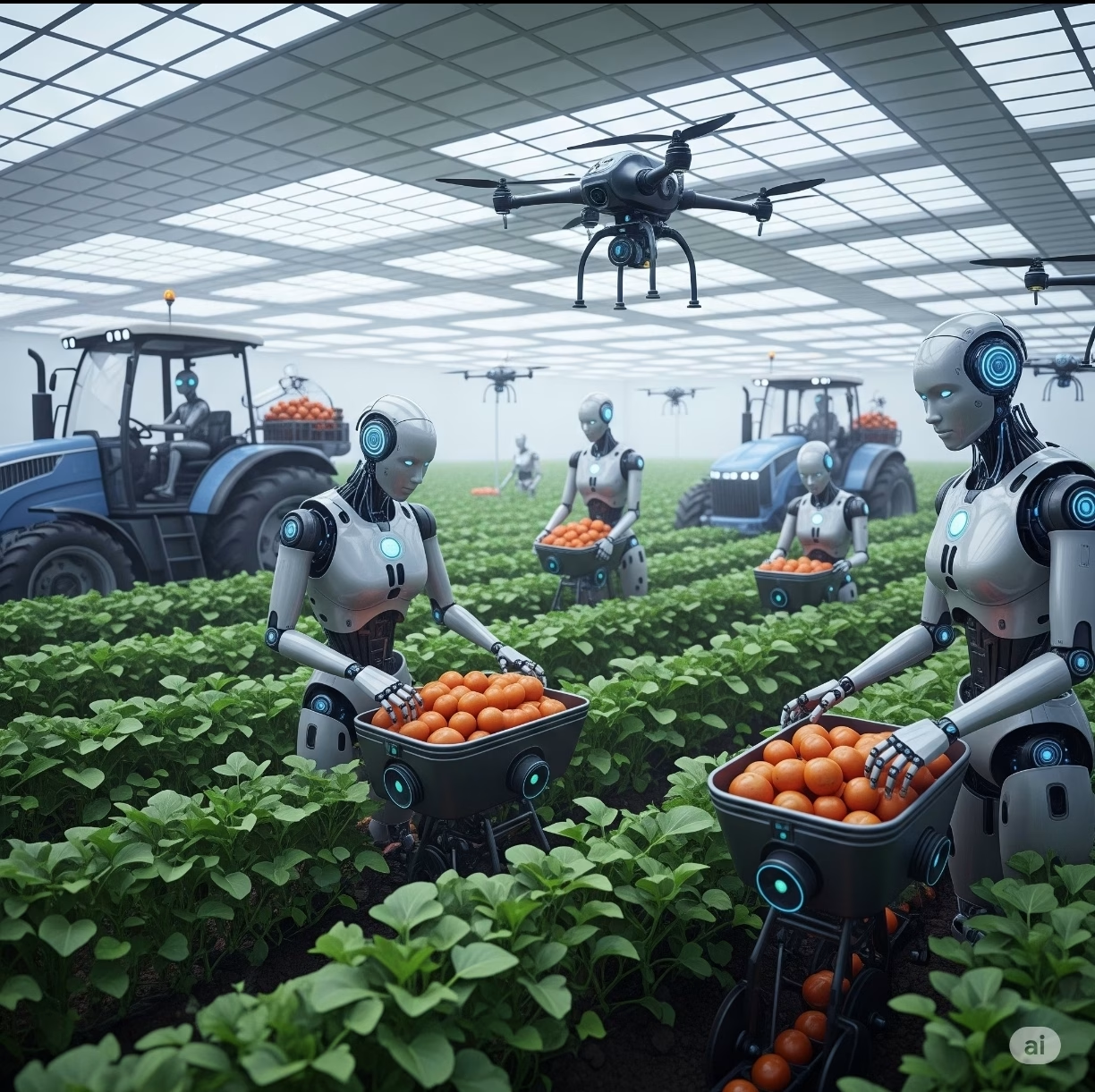
The Future of Sustainable Agriculture
🤖 Introduction: A New Era in Farming
Agriculture has always been the backbone of civilization. From the primitive use of oxen to the age of tractors, farming has constantly evolved. Now, we are entering a new era — the age of Robot Farmers.
These smart machines are no longer a vision of the future. They are here, working tirelessly in the fields, planting seeds, watering crops, identifying weeds, and even harvesting fruits with surgical precision.
“Robotics and AI are transforming farming into a data-driven, autonomous, and highly efficient process.”
🌿 What is a Robot Farmer?
A Robot Farmer refers to an autonomous or semi-autonomous robotic system designed to perform various agricultural tasks, often more precisely and efficiently than humans. These robots use:
- Artificial Intelligence (AI)
- Computer Vision
- GPS and Mapping Technologies
- IoT Sensors
They are often designed for:
- Precision Farming
- Weed Detection and Removal
- Seeding and Planting
- Automated Irrigation
- Crop Health Monitoring
- Fruit Picking and Harvesting
🚜 Types of Robot Farmers
1. Autonomous Tractors
Self-driving tractors equipped with GPS, LiDAR, and cameras. They can plow, seed, spray, and harvest without human intervention.
2. Weeding Robots
Robots like Ecorobotix or Naïo Technologies’ Dino can detect weeds using image recognition and eliminate them without harming crops.
3. Harvesting Robots
Machines such as the Agrobot E-Series can identify ripe strawberries and pick them delicately using robotic arms.
4. Drones in Agriculture
Drones like the DJI Agras series are used for:
- Aerial surveillance
- Crop health monitoring
- Precision spraying
5. Microfarmers (e.g., FarmBot)
Open-source robotic gardening systems for small-scale farming and education. Perfect for home gardens and classrooms.
📊 How Do Robot Farmers Work?
| Component | Function |
|---|---|
| AI Algorithms | Decision-making based on field data |
| Computer Vision | Recognizes crops vs. weeds, fruit ripeness |
| GPS/RTK | High-precision navigation in fields |
| IoT Sensors | Soil moisture, temperature, nutrient levels |
| Actuators/Servos | Control arms, wheels, and spray nozzles |
🌍 Benefits of Robot Farmers
✅ Increased Efficiency
Work 24/7 without fatigue, with higher speed and accuracy.
✅ Reduced Chemical Usage
Targeted spraying of pesticides reduces waste and pollution.
✅ Labor Shortage Solution
Fewer human workers are needed in physically demanding tasks.
✅ Sustainable Agriculture
Minimized soil compaction, resource usage, and environmental impact.
✅ Data-Driven Decisions
Real-time monitoring of crop and soil conditions.
⚠️ Challenges to Overcome
- High Initial Cost
Advanced robotics systems are still expensive for small farms. - Connectivity Issues
Many farms lack reliable internet, which hinders real-time data transfer. - Ethical & Employment Concerns
Will robots replace farmers, or empower them? - Environmental Conditions
Weather, mud, and terrain can affect robot performance.
🔮 The Future of Robot Farmers
The next generation of robot farmers will be:
- Smaller, cheaper, and smarter
- Collaborative (swarm robotics)
- Powered by solar energy
- Integrated with satellite and drone data
Imagine a fleet of small robots tending to crops, each handling a specific job — all coordinated through a cloud-based AI brain. That’s not science fiction — it’s the next step in agriculture.
🎓 Educational Use: Build Your Own Mini Robot Farmer!
Interested in robotics and farming? You can build your own robot farmer with:
- Arduino or Raspberry Pi
- Soil moisture sensor
- Mini water pump
- Servo arms
- Simple camera module
Perfect for science fairs, school projects, or smart gardening!
🧠 Conclusion: Farming Reimagined
Robot farmers are redefining how we grow food, combining tradition with innovation. They offer hope for a more sustainable, productive, and resilient future — where technology meets nature in perfect harmony.
“In the hands of these tireless machines, the seeds of the future are already being planted.”