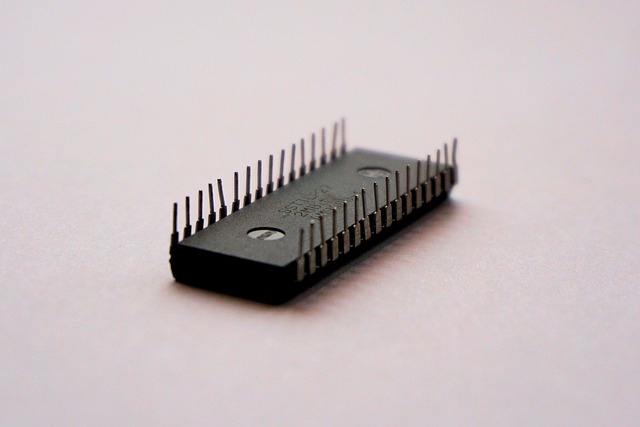
The Arduino Uno is based on the ATmega328P microcontroller chip, which is part of the AVR family of microcontrollers developed by Atmel (now a part of Microchip Technology). The ATmega328P is a popular and widely used microcontroller chip in the Arduino ecosystem due to its versatility, ease of use, and availability. Here are some key details about the ATmega328P chip:
Microcontroller Family: ATmega328P is a member of the AVR family of microcontrollers. AVR stands for “Alf and Vegard’s RISC processor,” named after the creators of the architecture.
Architecture: It uses a modified Harvard architecture with a reduced instruction set computer (RISC) design. This architecture makes it efficient and capable of handling a wide range of tasks.
Clock Speed: The ATmega328P typically operates at a clock speed of 16 MHz, providing reasonably fast processing capabilities for many applications.
Flash Memory: It has 32KB of Flash memory for program storage. This is where your Arduino sketch (program) is stored.
SRAM: It has 2KB of SRAM (Static Random-Access Memory) for temporary data storage during program execution.
EEPROM: There is also 1KB of EEPROM (Electrically Erasable Programmable Read-Only Memory) for non-volatile data storage, allowing data to be retained even when power is removed.
I/O Pins: The ATmega328P has 23 general-purpose I/O (input/output) pins that can be used for a variety of tasks, including digital input and output, analog input, PWM (Pulse-Width Modulation) output, and communication with other devices.
Analog-to-Digital Converter (ADC): It has a 10-bit ADC with up to 8 channels, allowing it to convert analog signals to digital values for sensor readings.
UART, SPI, and I2C Interfaces: It supports serial communication through UART (Universal Asynchronous Receiver-Transmitter), SPI (Serial Peripheral Interface), and I2C (Inter-Integrated Circuit) protocols, making it suitable for interfacing with various devices and sensors.
Bootloader: The ATmega328P on the Arduino Uno comes with a pre-loaded bootloader. This bootloader allows you to upload new sketches to the microcontroller over a USB connection without the need for a separate programmer.
Power Supply: It can operate within a voltage range of 1.8V to 5.5V, making it compatible with a wide range of power sources, including USB and batteries.
Low Power Modes: The chip supports various low-power modes, allowing you to conserve energy in battery-powered applications.
The ATmega328P microcontroller on the Arduino Uno is well-documented, and there are plenty of resources available, including datasheets, tutorials, and example code, to help you understand and work with this chip for your Arduino projects. Understanding the capabilities and limitations of the ATmega328P is essential for effectively designing and programming Arduino Uno-based projects.