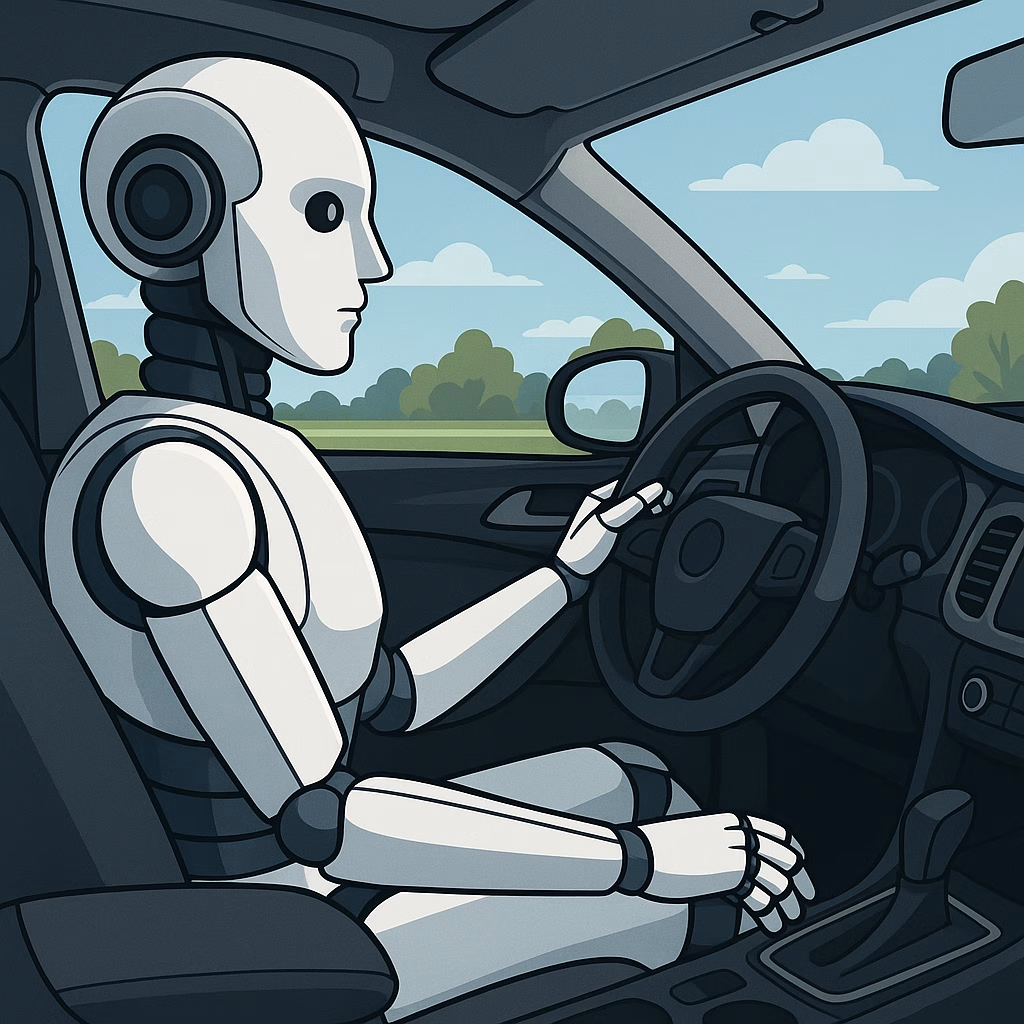
Are They Really Possible?
In the last decade, the idea of robot drivers—vehicles that drive themselves without human input—has moved from science fiction to reality. Self-driving technology is being developed and tested by major tech companies, automakers, and even governments. But how close are we to having fully autonomous vehicles on our roads?
Let’s take a deep dive into the world of robot drivers: how they work, their benefits, limitations, and what the future may hold.
🚗 What Exactly Is a Robot Driver?
A robot driver is a system powered by artificial intelligence (AI) that can operate a vehicle without human help. It performs all the tasks of a human driver, such as:
- Steering
- Accelerating and braking
- Navigating roads
- Responding to traffic lights and road signs
- Avoiding obstacles and pedestrians
These vehicles are often called autonomous vehicles (AVs) or self-driving cars.
🧠 How Do Robot Drivers Work?
Robot drivers use a combination of advanced technologies that work together in real time:
1. Sensors
- LIDAR (Light Detection and Ranging): Creates 3D maps of the car’s surroundings.
- Radar: Detects objects and their speed, useful in fog or darkness.
- Ultrasonic sensors: Used for close-range detection (parking, obstacles).
- Cameras: Capture visual data for identifying lanes, signs, and pedestrians.
2. Artificial Intelligence (AI) and Machine Learning
- AI processes all sensor data to understand the vehicle’s environment.
- Machine learning helps the vehicle “learn” from past experiences to make smarter decisions.
3. GPS and High-Definition Maps
- Provide accurate positioning and routing.
- Help plan the best path from point A to point B.
4. Decision-Making Algorithms
- Determine what actions to take—when to stop, go, turn, yield, etc.
- Consider safety, traffic rules, and road conditions.
🚦 Levels of Autonomy (SAE Classification)
| Level | Description | Human Needed? |
|---|---|---|
| 0 | No automation | Yes |
| 1 | Driver assistance (e.g., cruise) | Yes |
| 2 | Partial automation (e.g., Tesla) | Yes (monitoring) |
| 3 | Conditional automation | Maybe |
| 4 | High automation (robot taxis) | No (in areas) |
| 5 | Full automation (all conditions) | No |
Most real-world vehicles today are Level 2 or 3. Companies like Waymo and Cruise are aiming for Level 4 in specific zones.
🔍 Real-World Examples
Here are some companies pushing the boundaries of robot driving:
🚖 Waymo (Alphabet/Google)
- Operates self-driving taxis in Phoenix, AZ.
- Vehicles use no human drivers during trips.
- Technology includes over 20 sensors and deep-learning AI.
🏁 Tesla
- Offers “Autopilot” and “Full Self Driving (FSD)” in beta.
- Not fully autonomous (Level 2), but can perform highway driving, lane changes, and parking.
🚕 Cruise (General Motors)
- Testing robotaxis in San Francisco.
- Focused on electric autonomous vehicles for urban areas.
🌏 Baidu Apollo & Pony.ai (China)
- Operating autonomous taxis in cities like Beijing and Guangzhou.
- Approved for limited driverless rides.
💡 Advantages of Robot Drivers
- ✅ Fewer Accidents: Over 90% of accidents are caused by human error.
- ✅ Increased Mobility: Elderly, disabled, or non-drivers can travel independently.
- ✅ Reduced Traffic Jams: Coordinated vehicles may reduce congestion.
- ✅ Lower Emissions: Many robot cars are electric and optimize routes for efficiency.
- ✅ More Free Time: You can work, read, or relax during your ride.
⚠️ Challenges and Concerns
- ❌ Technology Still Evolving: Not yet safe for all weather or complex roads.
- ❌ Legal & Insurance Issues: Who is responsible in a crash?
- ❌ Hackers & Cybersecurity: Cars must be protected from digital attacks.
- ❌ Public Trust: Many people don’t feel comfortable with no driver.
- ❌ Job Loss: Professional drivers (taxis, trucks) may be displaced.
🛣️ When Will Robot Drivers Be Common?
| Region | Expected Use by | Use Case Examples |
|---|---|---|
| USA | 2025–2030 | City taxis, delivery bots |
| Europe | 2025–2035 | Smart mobility in cities |
| China | 2024–2027 | Commercial AV services |
| Global | 2040+ | Fully autonomous private cars |
The timeline depends on:
- Government regulations
- Public acceptance
- Continued AI development
🌐 Educational and Economic Impact
Robot driving technology is a major field in:
- STEM Education: Robotics, coding, AI
- Engineering Careers: Automotive, mechatronics
- Tech Startups: Smart cities, delivery bots, logistics
- Green Transportation: Less fuel, more clean energy
Students, researchers, and entrepreneurs should pay attention to this growing industry.
✅ Final Thoughts
Robot drivers are possible, and they’re already being tested in the real world. They promise to reshape how we think about transportation, mobility, and safety. But before we hand over the wheel completely, we need to address challenges in trust, technology, and laws.
The next time you step into a car, ask yourself—will a robot be driving you in 10 years?