For young minds eager to dive into the world of robotics, the right kit can spark a lifelong passion for STEM. These kits offer a fantastic blend of hands-on building, coding challenges, and fundamental engineering principles. Here’s a detailed look at some of the best robotics kits for aspiring engineers, categorized by skill level and focus:
Beginner-Friendly (Ages 8-12)
These kits are designed to introduce basic concepts in a fun, accessible way, often with visual programming or simplified coding interfaces.
* LEGO Mindstorms Robot Inventor:
* Why it’s great: LEGO Mindstorms has long been a gold standard for educational robotics. The Robot Inventor kit allows kids to build five unique robots (and design their own) using LEGO Technic elements, motors, and sensors. It connects to a free app with a Scratch-based drag-and-drop coding interface, making it very intuitive for beginners. They can learn about gear ratios, sensor input, and basic control flow.
* Key Features: Over 500 LEGO Technic pieces, intelligent hub, four motors, various sensors (color, distance, force), Scratch-based coding.
* Pros: Highly engaging, familiar LEGO building system, excellent software, good community support.
* Cons: Can be relatively expensive.
* Makeblock mBot:
* Why it’s great: The mBot is an affordable and robust entry-level robot that focuses on basic electronics, programming, and simple mechanics. It’s easy to assemble and uses mBlock, a Scratch-like visual programming environment that can also transition to Python for more advanced users. It’s a great platform for understanding sensors (line-following, ultrasonic) and actuators (motors).
* Key Features: Easy assembly, IR receiver/transmitter, light sensors, ultrasonic sensor, line follower, Bluetooth/2.4G wireless module.
* Pros: Durable, affordable, easy to get started, good transition to text-based coding.
* Cons: Less modular than LEGO, fewer advanced sensors out of the box.
Intermediate Level (Ages 12-16)
These kits introduce more complex electronics, programming concepts (often transitioning to text-based coding), and more sophisticated mechanical designs.
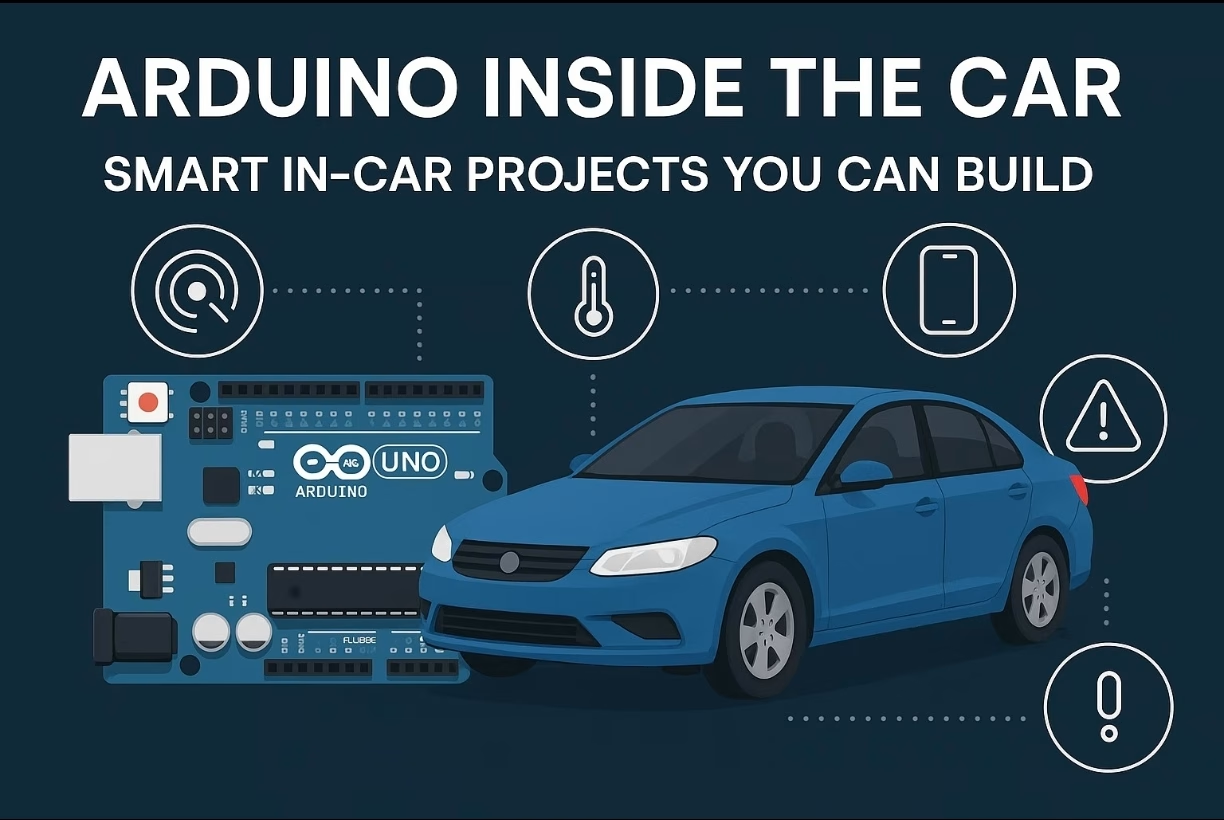
* Arduino Robot Kit (or Arduino Starter Kit with additional components):
* Why it’s great: Arduino is an open-source electronics platform that’s incredibly popular for DIY robotics. While there isn’t one definitive “Arduino Robot Kit,” many companies offer kits centered around Arduino boards. These kits typically require more hands-on wiring and introduce students to the C++-based Arduino programming language. This is where real electrical engineering and programming skills start to develop.
* Key Features: Arduino board (Uno, Nano), breadboard, various sensors (ultrasonic, IR, temperature), motors, servos, wires, LEDs.
* Pros: Teaches fundamental electronics and programming, highly versatile, massive online community and resources, affordable components.
* Cons: Steeper learning curve, requires more independent problem-solving.
* Raspberry Pi Robot Kits (e.g., Pi-Bot, Freenove Robot Kits):
* Why it’s great: Raspberry Pi-based kits introduce the power of a single-board computer, allowing for more complex programming (often Python) and the integration of advanced features like cameras for computer vision. Users can learn about Linux, networking, and more sophisticated control algorithms.
* Key Features: Raspberry Pi board, motor driver board, various sensors, camera module (optional), chassis, wheels.
* Pros: Powerful computing capabilities, excellent for learning Python and Linux, enables advanced projects (e.g., AI, computer vision).
* Cons: Requires some basic Linux command-line knowledge, can be more expensive.
Advanced / Project-Based (Ages 16+)
These kits are for those ready to tackle real-world engineering challenges, often involving specialized hardware or more in-depth programming.
* VEX Robotics Kits (VEX IQ, VEX EDR):
* Why it’s great: VEX is a competitive robotics platform used in schools and competitions worldwide. These kits are robust, highly modular, and designed for building complex robots capable of performing specific tasks. Students learn advanced mechanical design, engineering principles, and programming (VEXcode V5, based on Blocks, Python, or C++). It’s an excellent pathway for those interested in competitive robotics or a deeper dive into mechanical and software engineering.
* Key Features: Metal or plastic structural components, powerful motors, extensive range of sensors, VEX V5 Robot Brain, competition-oriented design.
* Pros: Industry-standard platform, promotes teamwork and problem-solving, prepares students for real-world engineering challenges, strong competition ecosystem.
* Cons: Significant investment, larger learning curve due to complexity.
* ROS-Based Robot Platforms (e.g., TurtleBot):
* Why it’s great: For serious aspiring roboticists, platforms that integrate the Robot Operating System (ROS) are the next step. ROS is a flexible framework for writing robot software, used extensively in research and industry. Kits like the TurtleBot (or similar open-source mobile robot platforms) allow users to experiment with navigation, mapping (SLAM), computer vision, and more advanced AI applications on a real robot.
* Key Features: Mobile robot base, single-board computer (e.g., Raspberry Pi 4 or Nvidia Jetson Nano), LiDAR/depth sensors, cameras, ROS software stack.
* Pros: Teaches industry-standard robot software development, enables complex autonomous behaviors, great for research and advanced projects.
* Cons: Very high learning curve, significant cost, requires strong programming and Linux skills.
Choosing the Right Kit:
When selecting a kit for an aspiring engineer, consider:
* Age and Skill Level: Start with something appropriate to avoid frustration.
* Interests: Does the child prefer building, coding, or a balance of both?
* Budget: Kits range widely in price.
* Learning Style: Some prefer guided projects, while others thrive with open-ended exploration.
* Expandability: Can the kit be upgraded or integrated with other components later on?
No matter which kit you choose, the most important thing is to encourage exploration, problem-solving, and a willingness to experiment.
Happy building!