AI Wars: Are They Possible?
The concept of “AI wars” may sound like science fiction, but it is theoretically possible. With rapid advances in artificial intelligence and autonomous systems, the battlefield of the future could look very different from today. However, there are multiple dimensions to consider, including military applications, ethical concerns, cyber warfare, and international regulations.
1. Military AI and Autonomous Weapons
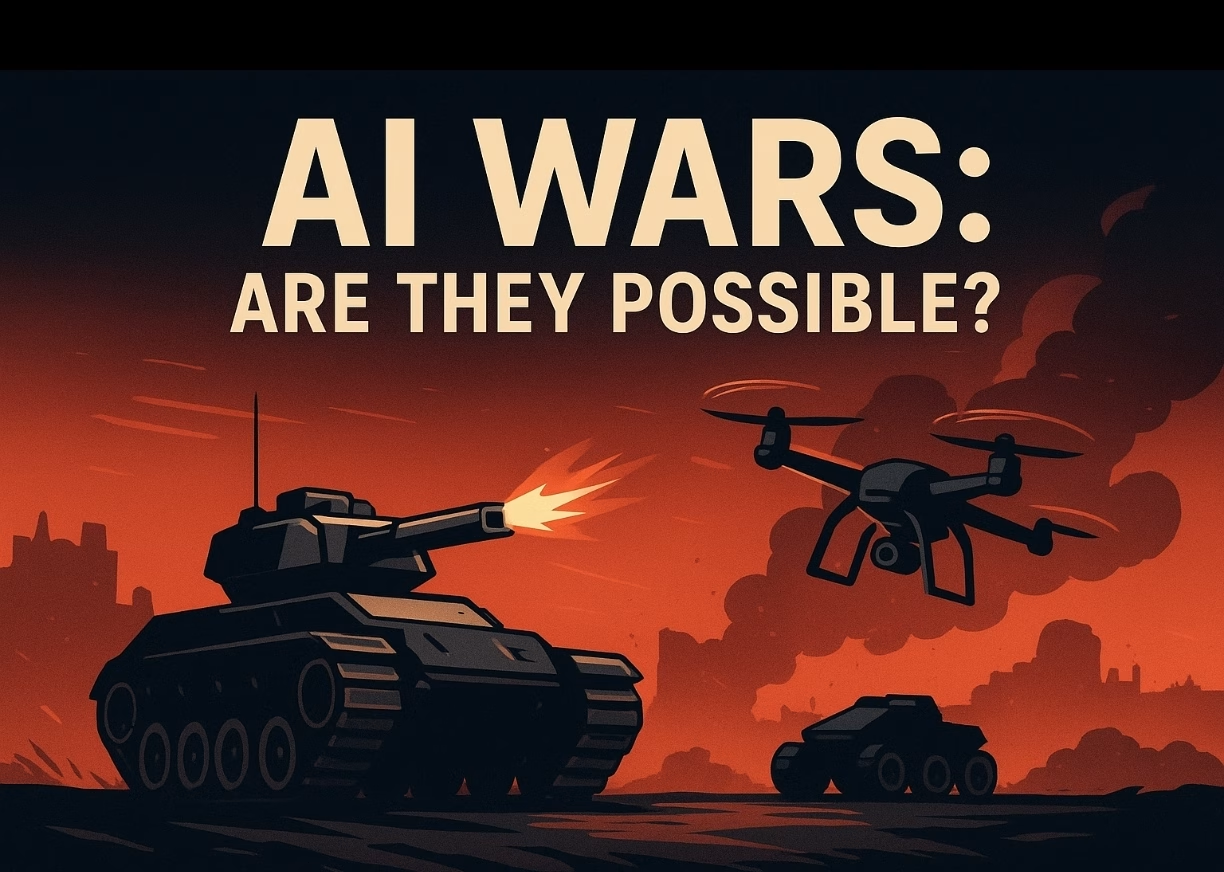
Many countries are actively developing AI-powered drones, unmanned ground vehicles, robotic tanks, and autonomous naval systems. These machines are designed to recognize targets, navigate complex environments, and sometimes even make limited decisions without human intervention.
Examples:
- Combat drones capable of identifying enemy vehicles or personnel.
- Unmanned ground vehicles for reconnaissance or logistics.
- Robotic sentries for border defense.
Note: Currently, most military AI systems operate under human supervision. Fully autonomous systems that can select and engage targets without human oversight remain highly controversial.
2. Fully AI-Controlled Warfare
A fully AI-driven war, where machines make strategic and tactical decisions independently, is theoretically possible but highly risky:
- Decision-making errors: AI might misidentify targets or make poor strategic choices, potentially escalating conflicts unexpectedly.
- Uncontrolled escalation: Autonomous systems on opposing sides could interpret defensive moves as attacks, triggering chain reactions.
- Unpredictable outcomes: Unlike human commanders, AI lacks intuition and moral judgment, which could lead to catastrophic consequences in civilian areas.
While AI vs AI combat has been tested in simulations, real-world deployment would pose unprecedented risks.
3. Cyber Warfare and AI
Beyond physical battles, AI is already transforming cyber warfare. AI systems can:
- Automate attacks: Continuously identify system vulnerabilities and optimize hacking attempts.
- Enhance defense: Detect intrusions and respond faster than human operators.
- Simulate strategies: Use predictive modeling to anticipate enemy moves in both cyber and hybrid conflicts.
In this domain, AI “wars” have effectively begun, although their impact is primarily in cyberspace rather than on the physical battlefield.
4. Ethics and International Regulations
The ethical implications of AI warfare are enormous:
- Civilian safety: Autonomous weapons could cause unintended civilian casualties if not properly controlled.
- Accountability: Who is responsible when an AI system makes a lethal decision—the developer, the commander, or the government?
- Global treaties: Many international organizations are actively discussing regulations to prevent uncontrolled deployment of lethal autonomous systems.
Current discussions aim to balance technological advancement with global safety and humanitarian standards.
5. Possible Future Scenarios
- AI-assisted combat: Humans remain in control while AI provides decision support, surveillance, and tactical recommendations.
- Semi-autonomous conflicts: Machines handle routine tasks and defensive operations, but humans authorize lethal actions.
- Full AI conflicts: Rare but possible, with autonomous systems operating independently on a large scale—currently the least likely scenario due to high risks.
Conclusion
In short:
- AI-assisted warfare is already a reality.
- Fully AI-driven wars remain theoretical but could happen if technology and strategy align.
- Ethical, legal, and practical concerns make full autonomy unlikely in the near future.
- The most probable outcome: AI enhances human-controlled strategies and operations rather than replacing them entirely.
Engage with the discussion: Share your thoughts, comment, and explore the possibilities of AI shaping the future of warfare.