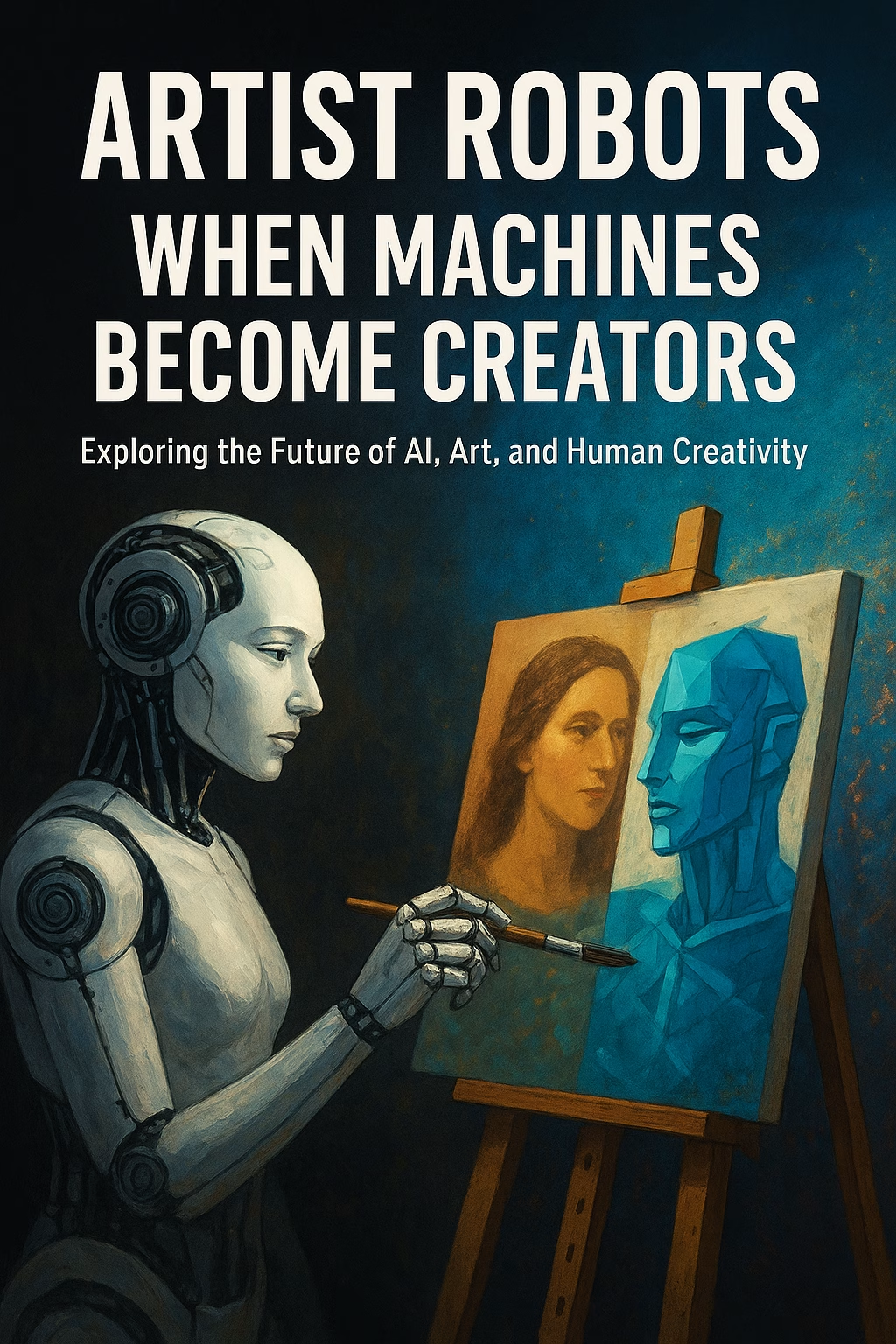
In recent decades, robots have moved beyond factories and laboratories into a surprising new field: artistic creation. Once considered a uniquely human domain, creativity is now being challenged and expanded by artist robots — machines that can paint, compose music, write poetry, or even perform live. This topic raises fascinating questions about the future of art, technology, and human identity.
🎨 What Are Artist Robots?
Artist robots are robots or AI-powered systems designed not only to perform repetitive tasks but also to generate original works of art. They combine robotics, artificial intelligence, machine learning, and sometimes biology-inspired algorithms to create works that can evoke emotions, inspire thought, and even be sold in galleries.
Some examples include:
- Painting robots: Equipped with mechanical arms, cameras, and AI, these robots can paint portraits, abstract art, or replicate human styles.
- Music robots: Robots capable of composing original pieces or improvising live with human musicians.
- Writing robots: AI-driven robots that generate poetry, stories, or screenplays.
- Performance robots: Machines designed to act, dance, or interact with human performers on stage.
🎵 Robots in Music
Music is often seen as the “language of the soul,” yet robots are now learning to speak it fluently.
- Composers: AI algorithms like OpenAI’s MuseNet or Sony’s Flow Machines have composed songs in the style of classical, jazz, or pop.
- Performers: Robotic drummers, pianists, and guitar players can perform flawlessly, even improvising alongside human musicians.
- Collaborations: Some artists use robots as “band members,” blending human emotion with robotic precision.
The key question: If a robot writes a moving symphony, is the art less valuable because it came from a machine?
🎨 Robots in Visual Arts
Robots have become painters and sculptors too:
- Painting Robots: Ai-Da, the world’s first ultra-realistic humanoid artist, has held art exhibitions worldwide. Her works are not random — she uses cameras and AI to “see” and then interpret the world on canvas.
- Sculpture and Installations: With 3D printers and robotic arms, machines can create intricate sculptures that might take humans months to design.
- Style Replication: AI can analyze thousands of paintings to generate new works in the style of Van Gogh, Picasso, or Monet — blurring the line between originality and imitation.
✍️ Robots as Writers and Poets
Robots are entering the world of literature too:
- Poetry: AI-generated poems can be surprisingly moving, blending rhythm, imagery, and metaphor.
- Stories and Scripts: Some robots can create short stories or even entire novels, offering new perspectives on narrative structure.
- Journalism: Already, AI is used in newsrooms to write reports on sports, finance, or weather.
This challenges our definition of creativity: is a poem written by a robot less “authentic” than one written by a human?
🤖 Performance and Theater Robots
Robots are also stepping into the spotlight:
- Dance Performances: Humanoid robots programmed to dance with human partners on stage.
- Theater: Robots acting in plays, sometimes portraying non-human characters or even symbolic roles.
- Interactive Art: Robots that engage with visitors in museums, changing behavior based on audience reactions.
This shows that art is no longer only about the object, but also about the experience.
⚖️ Ethical and Philosophical Questions
The rise of artist robots raises deep questions:
- Creativity – Can robots truly be creative, or are they just remixing human data?
- Value – Should robot-made art be considered “real” art? Would you pay millions for a painting made by a machine?
- Authorship – Who owns the artwork: the robot, the programmer, or the company that built it?
- Emotion – If art is about human expression, can a robot — without emotions — ever create “true” art?
🌍 The Future of Artist Robots
- Collaboration: Humans and robots may co-create, combining human imagination with robotic precision.
- Accessibility: Artist robots could help people who cannot paint, write, or play instruments to express themselves through machines.
- Cultural Shifts: We may see museums and galleries with sections dedicated to robotic art.
- New Movements: Just as Impressionism or Cubism changed art history, “Robotic Art” may become a recognized movement of its own.
One day, an art exhibition might feature Picasso, Da Vinci, and Ai-Da the robot side by side.
✨ Artist robots are not replacing human creativity — they are expanding the definition of art itself. Whether we see them as tools, collaborators, or independent artists, they remind us that creativity is not a fixed human trait but a process that evolves with technology.
💡 What do you think? Should robot-made art be considered as valuable as human art, or is it just a clever trick of algorithms?
👉 Share your thoughts in the comments and join the discussion!