The Future of Intelligent Machines
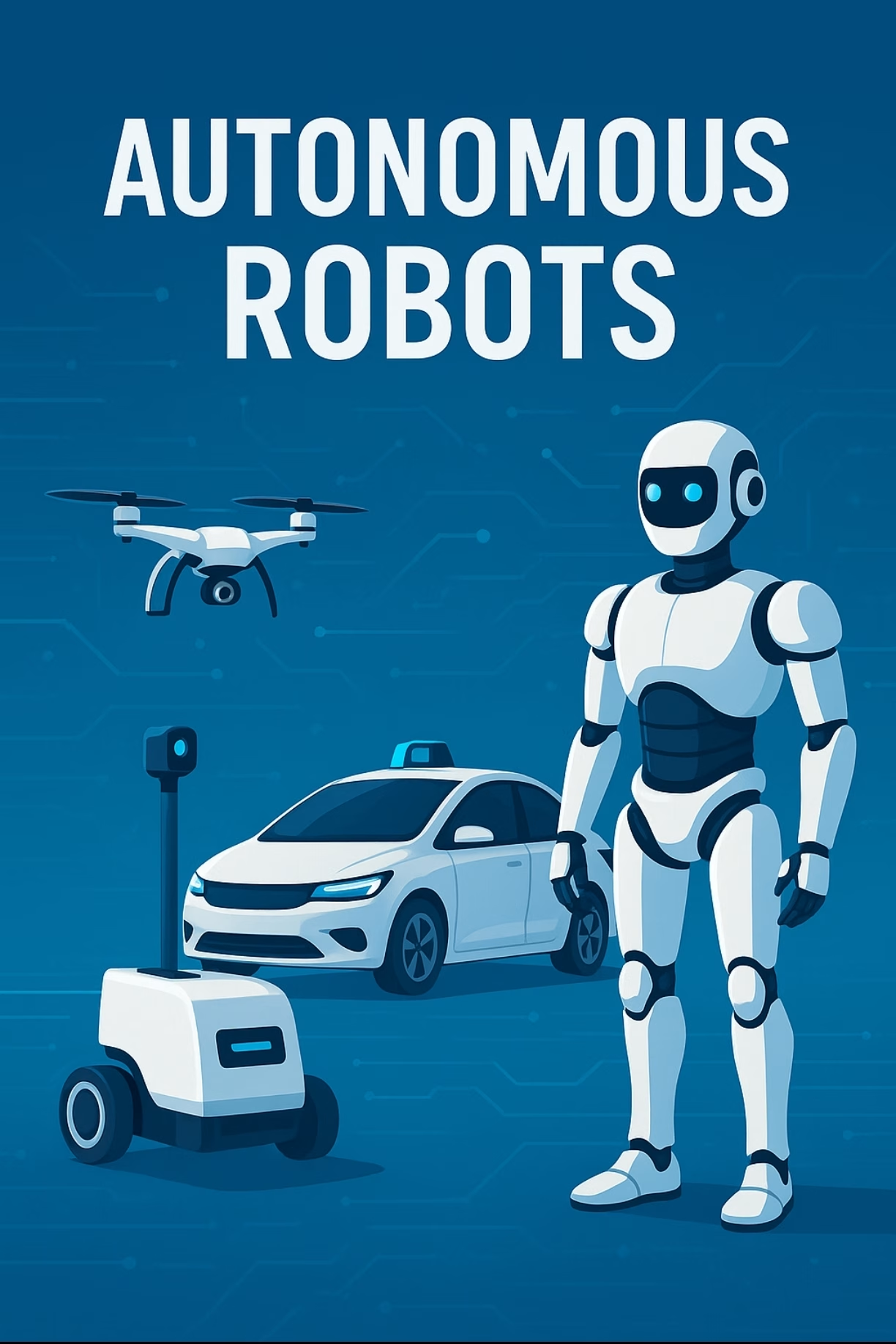
Autonomous robots are machines capable of performing tasks without continuous human intervention. Unlike traditional robots that require direct control, autonomous robots can perceive their environment, analyze data, make decisions, and take actions on their own.
They combine sensors, artificial intelligence, and actuators to navigate complex environments and achieve their goals.
🔹 Core Components of Autonomous Robots
- Perception (Sensing the Environment)
- Cameras, LiDAR, radar, ultrasonic sensors, GPS, accelerometers, and infrared sensors.
- Example: A self-driving car uses LiDAR to map the road, detect obstacles, and calculate distances.
- Decision-Making (Artificial Intelligence & Algorithms)
- Machine learning, path planning, obstacle avoidance, and reinforcement learning.
- Example: A warehouse robot deciding whether to take the left or right path to deliver goods efficiently.
- Action (Movement and Manipulation)
- Motors, wheels, arms, drones’ propellers, robotic grippers.
- Example: A robotic arm in a factory autonomously assembling electronic parts.
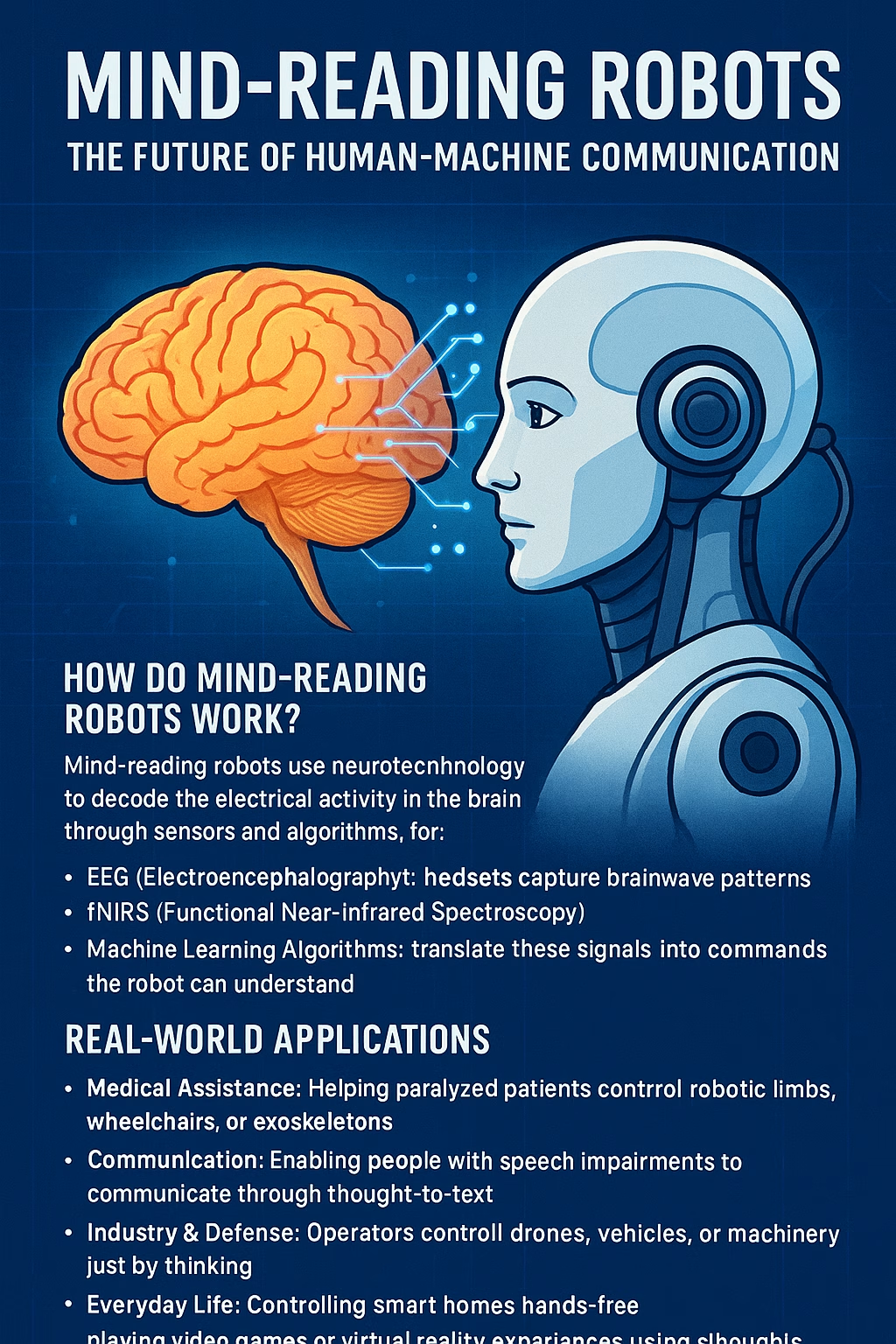
- Adaptation (Learning and Improving)
- Robots can adjust to changing environments.
- Example: Agricultural robots adapting to different soil or weather conditions while planting seeds.
🔹 Types of Autonomous Robots
- Industrial Robots
- Used in manufacturing for assembly, welding, and quality inspection.
- Example: Autonomous mobile robots (AMRs) transport parts across a factory floor.
- Agricultural Robots
- Automated tractors, drones for crop monitoring, and harvesting robots.
- Example: John Deere’s self-driving tractors use GPS and AI to plow fields without a human driver.
- Medical Robots
- Surgical robots, hospital delivery robots, elderly care assistants.
- Example: Da Vinci Surgical System assists surgeons with precision operations.
- Service Robots
- Used at homes, hotels, and airports.
- Example: Autonomous vacuum cleaners like Roomba or airport service robots guiding passengers.
- Military Robots
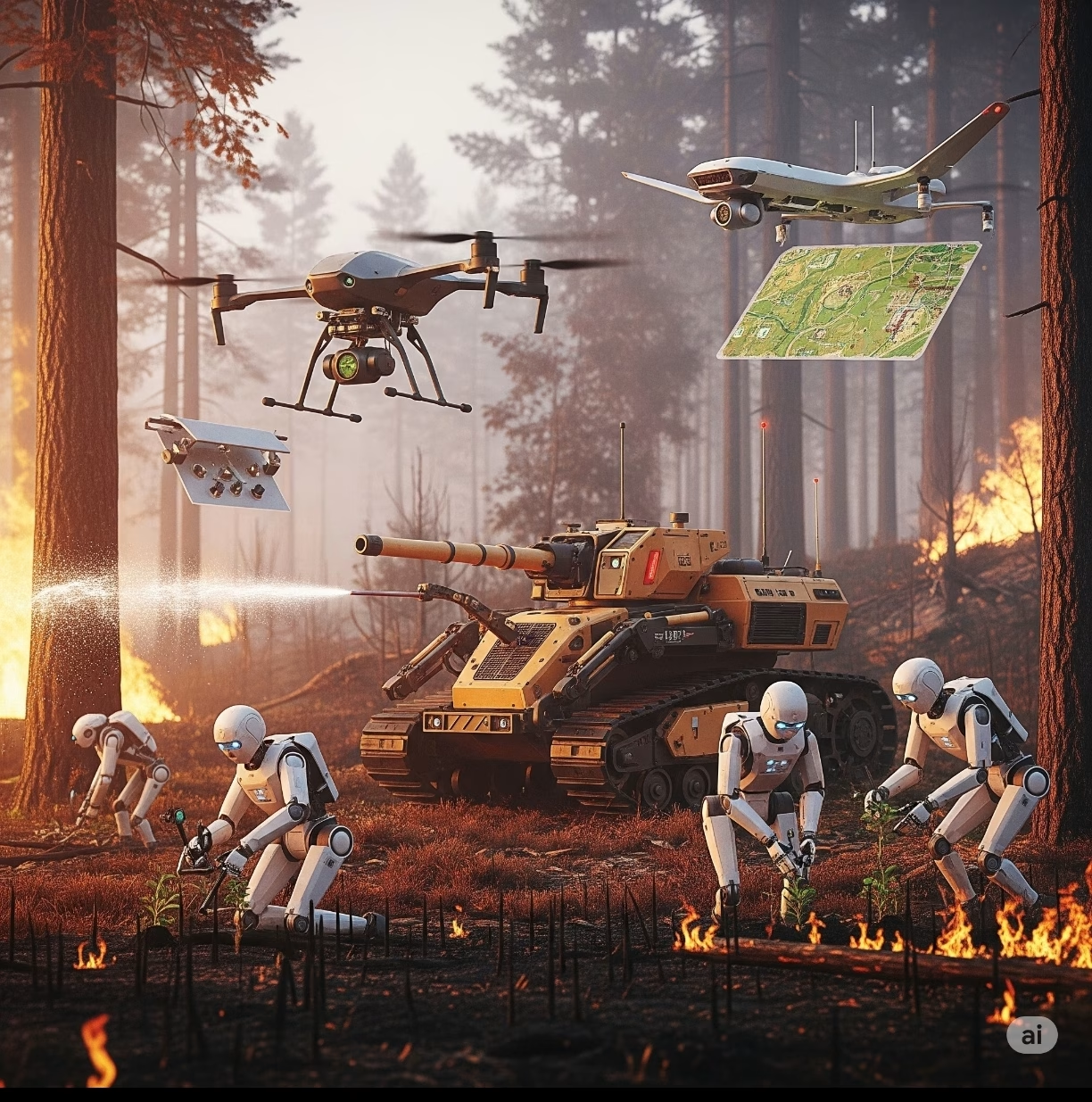
- Surveillance drones, bomb disposal robots, and unmanned vehicles.
- Example: PackBot, used by the U.S. military for reconnaissance and bomb detection.
- Transportation Robots
- Self-driving cars, delivery drones, autonomous ships.
- Example: Tesla’s Autopilot and Amazon’s delivery drones.
🔹 Advantages of Autonomous Robots
- Operate in hazardous environments (e.g., nuclear plants, deep-sea exploration, space missions).
- Increase efficiency and reduce human error.
- Can work 24/7 without fatigue.
- Cost-effective in the long run.
🔹 Challenges and Ethical Concerns
- High initial cost of development and deployment.
- Safety risks in case of malfunction (e.g., accidents with autonomous cars).
- Ethical issues in military applications (autonomous weapons).
- Job displacement in industries heavily relying on automation.
🔹 Real-World Examples
- Boston Dynamics’ Spot – A four-legged robot used in construction, research, and inspection.
- Waymo Self-Driving Cars – Fully autonomous taxis operating in certain U.S. cities.
- Amazon Robotics – Warehouse robots that move shelves and optimize logistics.
- DJI Drones – Autonomous drones with obstacle avoidance and AI-based flight modes.
🔹 Future of Autonomous Robots
Autonomous robots will become smarter, safer, and more integrated into daily life. We can expect:
- Fully autonomous public transport systems.
- Household robots assisting with cooking, cleaning, and elderly care.
- Exploration robots colonizing space and oceans.
- AI-driven military robots raising global ethical debates.
Autonomous robots are not just machines—they are a glimpse into a future where humans and robots coexist and collaborate.
Share your thoughts in the comments and join the discussion on ROBOFORUM – the community for future-minded thinkers in robotics and AI!
Leave a comment and join the discussion. If you’re not already subscribed, please subscribe or log in.